
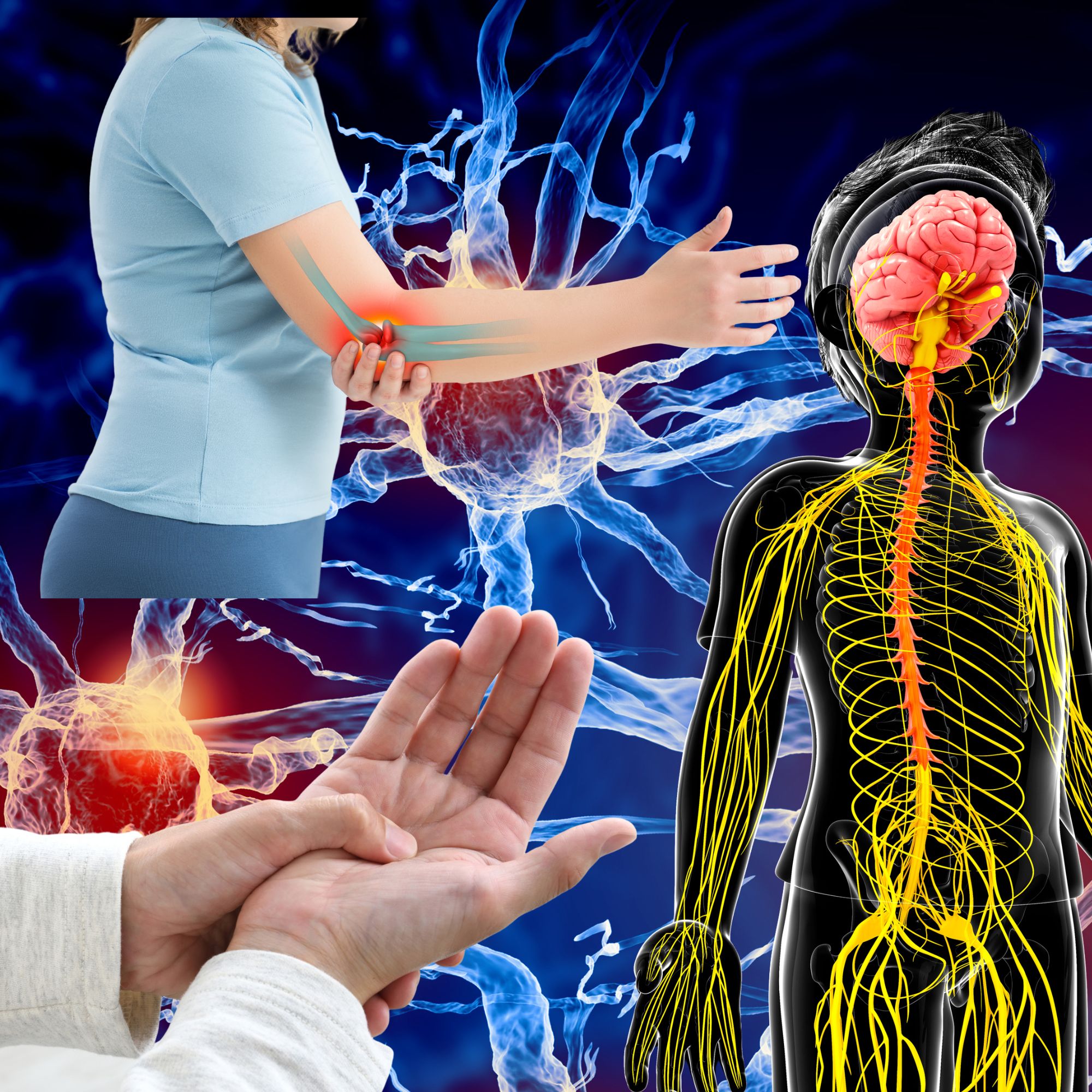
Burning, Tingling or Electric Shocks? Nerve Pain Explained: Neuropathy, Neuralgia & Neuritis
Do your feet burn at night, as if they were standing on hot sand? Do you get pins and needles in your hands that will not go away? Does a sudden electric shock shoot down your leg or across your face? Does even a bedsheet or a light shirt hurt your skin? And have paracetamol and anti-inflammatory tablets done nothing at all? These are the classic signs of nerve pain (douleur nerveuse, or douleur neuropathique in French). It is very common, it feels very different from a muscle or joint ache, and it needs a different approach. This guide explains the words doctors use (neuropathy, neuralgia, neuritis), why nerve pain does not respond to ordinary painkillers, what causes it, and when you should not wait.
What Is Nerve Pain?
If you twist an ankle or strain a back muscle, the area throbs, swells and is tender to touch. This is nociceptive pain: healthy nerves are correctly reporting to the brain that tissue has been injured. It usually fades as the tissue heals.
Nerve pain (neuropathic pain) is different. Here, the nerve itself is irritated, squeezed or damaged. Instead of passing on an accurate message, it misfires and sends false or exaggerated signals, which the brain reads as burning, stabbing, electric shocks or numbness, sometimes with no injury to see at all. The pain can persist long after the original cause has gone.
How Does It Feel?
Patients describe nerve pain in remarkably similar words. Typical features are:
- Burning or scalding: like hot water or sunburn on the skin, even when the skin feels cool.
- Electric shocks or shooting jolts: sudden, sharp pains travelling along a line, for example down the arm or the back of the leg.
- Pins and needles or tingling (paraesthesia): an “asleep” feeling that does not wear off.
- Allodynia: pain from something that should not hurt, such as a bedsheet resting on the toes or a light shirt against the skin.
- Numbness: a loss of feeling, often described as “walking on pebbles or cotton wool”, sometimes mixed with pain.
- Worse at night, when there is nothing else to distract you, and often disturbing sleep.
Neuropathy, Neuralgia, Neuritis: What Is the Difference?
Doctors use three words that sound alike but mean different things:
| Term | What it means | Typical examples |
|---|---|---|
| Neuropathy (neuropathie) | Damage to, or malfunction of, the nerves themselves. It most often affects both feet first and then the hands (the “glove and stocking” pattern), and can cause burning, numbness and loss of balance. Rarely it also affects muscle strength or automatic functions such as digestion and blood pressure. | Diabetic neuropathy; neuropathy from vitamin B12 deficiency, alcohol or certain medicines. A single nerve can also be trapped, as in carpal tunnel syndrome at the wrist. |
| Neuralgia (névralgie) | Sharp, shock-like pain felt along the path of one particular nerve, often in short attacks, with normal strength between attacks. | Trigeminal neuralgia (facial pain); pain that lingers after shingles (post-herpetic neuralgia); intercostal neuralgia (along the ribs). |
| Neuritis (névrite) | True inflammation of a nerve or several nerves, for example from an infection, an autoimmune reaction or a viral illness. It is less common than the word suggests. | Optic neuritis (the nerve of the eye, causing blurred vision and pain on moving the eye); brachial neuritis (sudden severe shoulder pain, then weakness); some cases of facial palsy. |
In everyday life these words are often used loosely, and the same patient can have more than one of these problems. What matters is not the label but finding the cause.
You may also have heard of sciatica (pain down the buttock and leg) and of pain spreading from the neck into the arm. These usually come from a pinched nerve root in the spine, called a radiculopathy. See also our article on neck pain (cervicalgia).
Why Do Ordinary Painkillers Rarely Work?
One of the most frustrating experiences with nerve pain is taking paracetamol, ibuprofen or another anti-inflammatory and feeling nothing.
- Paracetamol and anti-inflammatory tablets work mainly on pain caused by inflamed or injured muscle, tendon and joint tissue.
- Nerve pain comes from over-excitable, injured nerve fibres that discharge spontaneously, and from changes in how the spinal cord and brain process pain signals.
Calming a misfiring nerve takes medicines that act on the nerves themselves. Depending on the cause, your doctor may use gabapentin or pregabalin, certain antidepressants used at low doses for pain (duloxetine, amitriptyline), carbamazepine (the usual first choice for trigeminal neuralgia), or creams and patches applied to the skin (lidocaine, capsaicin). These are prescription medicines. They are started at a low dose and increased gradually, they can take one to several weeks to work, and they can cause drowsiness or dizziness. They should never be shared with someone else, and should not be stopped suddenly without medical advice.
What Causes Nerve Pain?
Nerve pain is a symptom, not a final diagnosis. Finding the root cause is the key to relieving it and to preventing permanent nerve damage. The main causes an internal medicine specialist looks for are:
- Diabetes and high blood sugar: the commonest cause in many countries, including Mauritius. Years of high sugar damage the tiny blood vessels that feed the nerves. It can appear in pre-diabetes too, and sometimes it is the first sign of diabetes. See diabetes warning signs.
- Vitamin B12 deficiency: from a poor diet, stomach or bowel disease, or long-term use of some medicines such as metformin or acid-reducing tablets. It is easily checked and treated.
- Alcohol: regular heavy drinking damages the nerves directly and also depletes vitamins.
- Pinched or trapped nerves: a slipped disc in the neck or lower back, or a nerve squeezed in a narrow “tunnel”, such as carpal tunnel syndrome at the wrist or the ulnar nerve at the elbow.
- Shingles (herpes zoster): a painful blistering rash on one side of the body that can leave burning pain for months afterwards.
- Kidney disease, thyroid disease and autoimmune conditions: for example kidney failure, an underactive thyroid, lupus or vasculitis.
- Medicines and treatments: some chemotherapy drugs and some antibiotics or tuberculosis medicines can affect the nerves. Never stop a prescribed medicine on your own. Speak to your doctor first.
- Infections and other causes: HIV, leprosy, certain blood disorders, inherited neuropathies, or, in a number of people, no cause is found despite full tests.
How Is It Diagnosed?
The diagnosis starts with listening to your story and examining you: where the symptoms are, how they began, what the pain feels like, and how your sensation, reflexes, strength and balance are. Your feet, skin and pulses are checked too.
- Blood tests look for the common treatable causes: blood sugar and HbA1c, vitamin B12, thyroid, kidney and liver function, a full blood count and markers of inflammation. Other tests are added if the picture suggests it.
- Nerve conduction studies and electromyography (EMG) measure how well the nerves and muscles carry electrical signals. They help confirm neuropathy, trapped nerves and pinched nerve roots.
- MRI of the spine or the affected area is used when a pinched nerve, spinal cord problem or tumour is suspected.
- Sometimes a referral to a neurologist is needed.
What Happens If It Is Left Untreated?
Nerve pain does not usually “burn out” on its own when there is an ongoing cause. The nerve damage can slowly progress and may become permanent. Numb feet do not feel blisters, cuts or pressure, so small wounds can go unnoticed and turn into ulcers and infections, especially in diabetes. Loss of balance and sensation increases the risk of falls. Chronic pain also disrupts sleep, mood and daily life. The earlier the cause is found and treated, the better the chance that the nerves recover or at least stop getting worse.
How Is It Treated?
- Treat the cause. This is the most important step: good control of blood sugar, replacing vitamin B12, stopping alcohol, treating the thyroid, adjusting a causative medicine, or releasing a trapped nerve.
- Medicines for nerve pain. As described above, gabapentin or pregabalin, duloxetine or amitriptyline, carbamazepine for trigeminal neuralgia, or skin creams and patches. Usually the aim is to reduce pain by about a third to a half and to let you sleep and function again, not necessarily to remove it completely. Strong opioid painkillers are generally not helpful for long-term nerve pain.
- Physiotherapy and gentle exercise. Helps strength, balance and circulation, and can ease a pinched nerve.
- Splints, injections or surgery. A wrist splint for carpal tunnel syndrome, nerve root injections for a pinched nerve, or surgery in selected cases that do not improve.
- Shingles. Antiviral treatment started within 72 hours of the rash lowers the risk of long-lasting nerve pain. A vaccine is available for people at risk.
- Sleep, stress and mood. Chronic pain and poor sleep feed each other. Relaxation, regular activity and good sleep habits are a real part of treatment.
Habits That Help
- Check your feet every day, including between the toes and the soles, for cuts, blisters, redness or sores. Use a mirror if needed.
- Wear well-fitting closed shoes and soft seamless socks. Do not walk barefoot, including on hot sand or hot floors.
- Test bath water with your elbow or a thermometer, as numb feet and hands can burn without you feeling it. Avoid hot-water bottles and heating pads on numb skin.
- Keep your blood sugar, blood pressure and cholesterol well controlled if you have diabetes.
- Limit or avoid alcohol and do not smoke.
- Stay active: walking, swimming or cycling improve circulation and balance.
- Take your medicines exactly as prescribed, and tell your doctor about any drowsiness or dizziness.
- Have your vitamin B12 checked periodically if you take metformin long term.
When to Seek Medical Help Quickly
- 🔴 Sudden weakness or loss of strength in an arm or leg, for example a foot that drops or a hand that cannot hold a cup.
- 🔴 Weakness or numbness that spreads quickly, starting in the feet and rising up both legs over hours or days.
- 🔴 Numbness around the groin, buttocks or inner thighs (“saddle numbness”), loss of control of the bladder or bowels, or inability to pass urine, especially with back pain.
- 🔴 A drooping face, slurred speech, sudden confusion or vision loss: call SAMU (114) immediately.
- 🔴 Severe back pain with fever, or after an injury, with new leg symptoms.
- 🟡 A painful blistering rash on one side of the body: possible shingles, see a doctor within 72 hours.
- 🟡 A numb foot with a wound, blister, ulcer, redness or swelling, especially with diabetes.
- 🟡 Burning, tingling or numbness that lasts more than a few days, keeps coming back, or is slowly spreading.
- 🟡 Pain that wakes you at night or keeps you from working, or electric-shock pain in the face when you eat, talk or brush your teeth.
- 🟡 Unexplained weight loss, fever or night sweats together with nerve symptoms.
The Bottom Line
Nerve pain is real, it is very common, and it is not “all in your head”. It feels different because it is different: the nerve itself is the problem, which is why paracetamol and anti-inflammatories so often fail. The words neuropathy, neuralgia and neuritis matter less than finding out why your nerves are misfiring, whether it is diabetes, a vitamin deficiency, a pinched nerve or something else, because treating the cause protects your nerves for the future. There are effective treatments, so you do not need to live with burning, shocks and sleepless nights.
If you have burning, tingling or electric pain that is lasting, affecting your sleep or limiting your daily life, do not wait for it to go away on its own. Always consult your doctor before starting or stopping any medicine.
Burning feet, tingling hands or electric-shock pain that will not go away? Message directly and ask.
Message on WhatsAppThis article is general health information and does not replace a medical consultation. In a medical emergency, call SAMU (114) or go to your nearest hospital.