Shoulder Bursitis Explained: Subacromial Bursitis Symptoms, Causes & Treatment
Does it hurt at the top or side of your shoulder when you lift your arm to reach a shelf, comb your hair or put on a jacket? Does the pain wake you at night when you roll onto that side? Perhaps it started after a long day of painting, gardening or lifting, or it crept up with no obvious reason. This could be shoulder bursitis, most often in a small cushion called the subacromial bursa. It is common, it is painful, and it usually settles well without surgery.
What Is a Bursa?
A bursa is a thin, flat sac filled with a little lubricating fluid. Your body has dozens of them, placed wherever a tendon or muscle has to glide over bone. Think of a bursa as a slippery cushion that lets structures slide past each other without rubbing. When a bursa is irritated, it becomes inflamed, thickens and fills with extra fluid. This is called bursitis.
What Is Shoulder Bursitis?
Shoulder bursitis is inflammation of one of the bursae around the shoulder. By far the most common is the subacromial (or subacromial-subdeltoid) bursa, which is why most doctors mean this one when they say “shoulder bursitis”. Less often, other bursae near the shoulder blade or the front of the shoulder can be affected. Bursitis can also occur at other joints, such as the elbow, hip and knee, but those are different conditions.
Subacromial Bursitis in Detail
The acromion is the bony point at the top of your shoulder blade, forming a roof above the shoulder joint. Under this roof run the tendons of your rotator cuff, and between the tendons and the bone sits the subacromial bursa. Each time you lift your arm, the tendons and the bursa have to slide through a narrow gap under that roof.
When the gap becomes crowded, the bursa is pinched and rubbed. This can happen if the tendons swell, if the bone is rough or has a spur, if the shoulder blade moves poorly, or if the shoulder is overloaded. The bursa reacts by becoming inflamed, which makes the gap even tighter and the pain worse. Doctors often group this picture under names such as subacromial pain syndrome or shoulder impingement.
In practice, bursitis rarely travels alone. The bursa and the rotator cuff tendons are neighbours, and they are usually irritated together. This is why treatment of the two is almost the same.
The Warning Signs
- Pain at the top or outer side of the shoulder, sometimes spreading to the upper arm, but rarely below the elbow.
- A painful arc: pain that appears when you lift your arm sideways, usually somewhere between about 60 and 120 degrees (roughly from waist height to just above shoulder height), and eases when the arm goes higher or comes back down.
- Pain with overhead activity, such as hanging clothes, reaching a high shelf or washing your hair.
- Night pain, especially when lying on the affected shoulder.
- Tenderness when you press just below the bony tip of the shoulder.
- Difficulty reaching behind your back, or a feeling of catching or pinching as the arm moves.
- Mild swelling or warmth in some cases, though the bursa is deep and swelling is often not visible.
- Weakness that is mostly due to pain, because you cannot push through the discomfort.
What Causes It?
- Repetitive overhead activity: painting, hanging laundry, carpentry, lifting, swimming, racket sports, gym workouts.
- A sudden increase in activity, such as a weekend of heavy DIY or a new training programme.
- Rotator cuff tendinopathy, the most common companion and trigger.
- A fall or direct blow to the point of the shoulder.
- Poor posture, especially a rounded upper back and shoulders pushed forward, which narrows the space under the acromion.
- Age: the tendons and bone change with time, and symptoms are most common after 40.
- Calcium deposits in the rotator cuff tendon, which can cause sudden, severe pain.
- Inflammatory conditions, such as gout, rheumatoid arthritis and other forms of rheumatism.
- Diabetes and thyroid disorders, which make shoulder problems more frequent and slower to settle.
- Infection, which is rare but important, and is covered below.
A Rarer but Serious Cause: Infected Bursitis
Occasionally a bursa becomes infected by bacteria. This is much less common in the shoulder than in superficial bursae such as the elbow or knee, but it can occur in people with diabetes, a weakened immune system, a recent injection or a skin wound near the shoulder. The shoulder is typically hot, red, swollen and very painful, often with fever. This needs urgent medical assessment and antibiotics, and sometimes drainage.
Is It Really Bursitis? How It Is Diagnosed
Shoulder pain has many causes, including a rotator cuff tear, frozen shoulder, arthritis of the shoulder or collarbone joint, a pinched nerve in the neck and, occasionally, the heart. Diagnosis usually combines:
- Your story and an examination, checking movement, strength and specific tests that reproduce the pain when the tendons and bursa are squeezed.
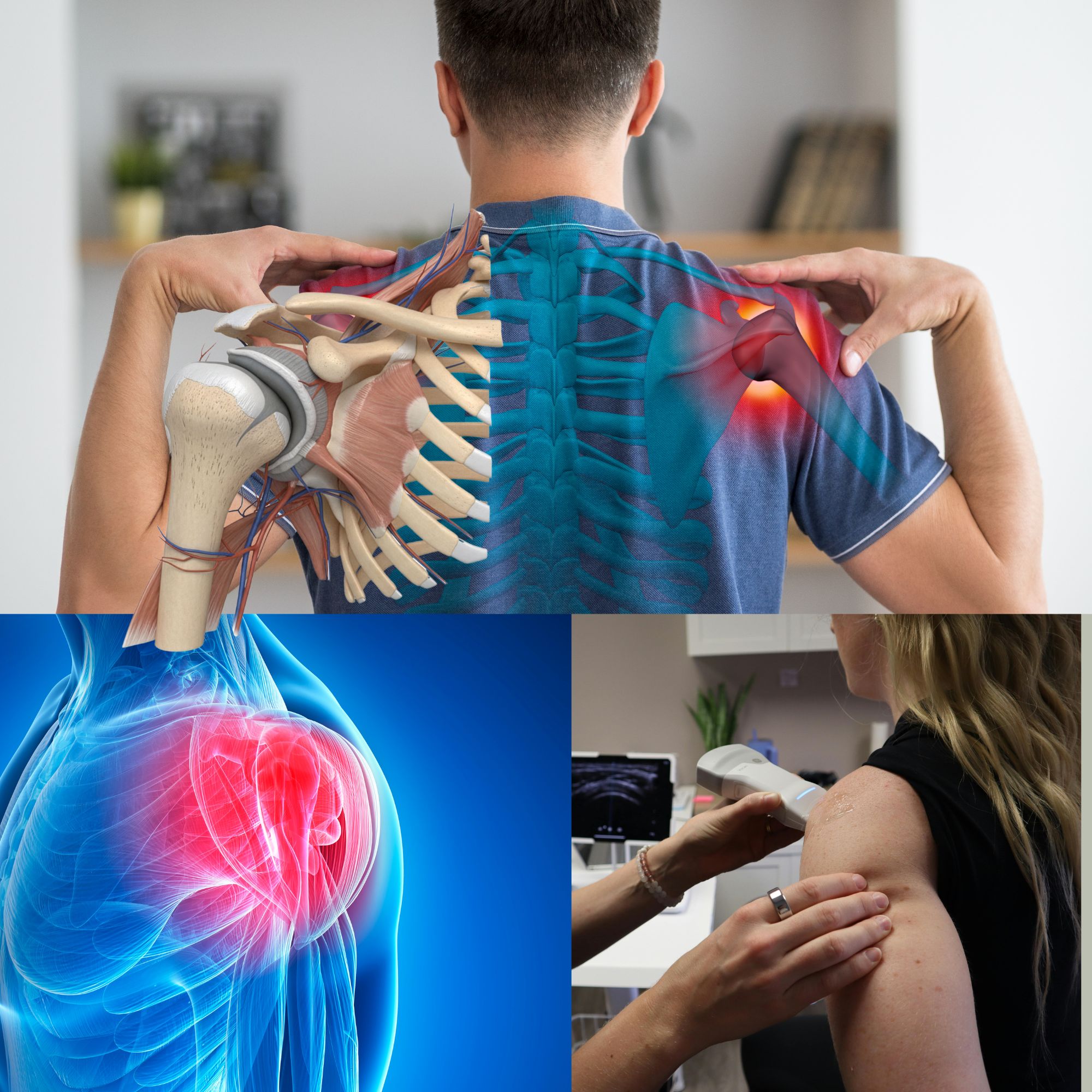
- Ultrasound, as shown in the picture above. It is quick and painless, can show a thickened or fluid-filled bursa and tendon problems, and can watch the shoulder as it moves.
- X-ray, to look for arthritis, a bone spur or calcium deposits.
- MRI, reserved for severe pain, pain after an injury, or cases that have not improved after several weeks, mainly to look for a rotator cuff tear.
- Blood tests, and sometimes sampling of the fluid, if infection or an inflammatory disease such as gout or rheumatoid arthritis is suspected.
A useful clue: in bursitis and tendinitis, someone else can usually lift your arm fully even if it hurts, whereas in frozen shoulder the joint itself is stiff and cannot be moved passively.
What Happens If It Is Left Untreated?
Pushing through the pain can lead to long-lasting discomfort, loss of strength and a stiff shoulder. The more the bursa and tendons are irritated, the greater the risk that a tendon will fray or tear over time. Early assessment and sensible rehabilitation usually prevent this.
How Is It Treated?
- Relative rest. Avoid the movements that provoke the pain, especially repeated overhead work, but do not immobilise the shoulder completely. A stiff shoulder is a bigger problem than an irritated bursa.
- Pain relief. Paracetamol, or a short course of anti-inflammatory tablets or gel if they are safe for you. A cold pack wrapped in a cloth for 15 to 20 minutes can ease a flare-up.
- Physiotherapy and exercises. This is the cornerstone of treatment. Gentle movement first, then progressive strengthening of the rotator cuff and shoulder blade muscles, which improves how the shoulder moves and makes more room under the acromion. Most people need around 6 to 12 weeks.
- Corticosteroid injection into the bursa, ideally guided by ultrasound so that it lands exactly in the right place. It can give good relief for a few weeks and can help you take part in rehabilitation, but repeated injections can weaken the tendon, so they are used sparingly.
- Treating the cause, such as controlling diabetes or treating gout or rheumatoid arthritis.
- Antibiotics and drainage if the bursa is infected.
- Surgery is rarely needed. Arthroscopic subacromial decompression is sometimes considered when months of proper treatment have failed, but studies have shown that for many people it works no better than structured exercise, so it is not a routine option.
How Long Does Recovery Take?
A mild flare-up may settle in a few weeks. Longer-standing pain, particularly when the rotator cuff is also involved, often takes two to three months of consistent rehabilitation, and sometimes longer. Improvement is usually gradual rather than sudden, and keeping up the exercises is what prevents a relapse.
Habits That Help
- Warm up before overhead or sporting activity, and build up gradually.
- Take regular breaks from repetitive overhead work.
- Avoid sleeping on the painful side, and rest the arm on a small pillow.
- Keep everyday items between waist and chest height.
- Improve your posture, especially at your desk and when using your phone.
- Keep up the strengthening exercises after the pain settles.
When to Seek Medical Help Quickly
- 🔴 Shoulder or arm pain with chest pain, breathlessness or sweating: call SAMU (114) or go to hospital immediately.
- 🔴 A hot, red, swollen and very painful shoulder, especially with fever: an infection must be ruled out urgently.
- 🔴 Sudden weakness or inability to lift your arm after a fall or injury: this may be a rotator cuff tear.
- 🟡 Numbness or tingling down the arm, or neck pain that shoots into the arm.
- 🟡 Pain that is not improving after 4 to 6 weeks, or that keeps waking you at night.
- 🟡 You have diabetes, gout or rheumatoid arthritis, or you take medicines that weaken your immunity.
- 🟡 You have kidney disease, stomach ulcers, heart disease or take blood thinners, as many painkillers may not be safe for you.
The Bottom Line
Shoulder bursitis, and subacromial bursitis in particular, is common and very treatable. Most people recover with relative rest, the right exercises and time, without any need for surgery. The sooner the shoulder is properly assessed and rehabilitated, the faster you return to your normal activities.
If your shoulder pain is lasting, affecting your sleep or limiting your work, do not wait for it to go away on its own. Always consult your doctor before starting or stopping any medicine.
Shoulder pain that will not settle, or keeps waking you at night? Message directly and ask.
Message on WhatsAppThis article is general health information and does not replace a medical consultation. In a medical emergency, call SAMU (114) or go to your nearest hospital.