
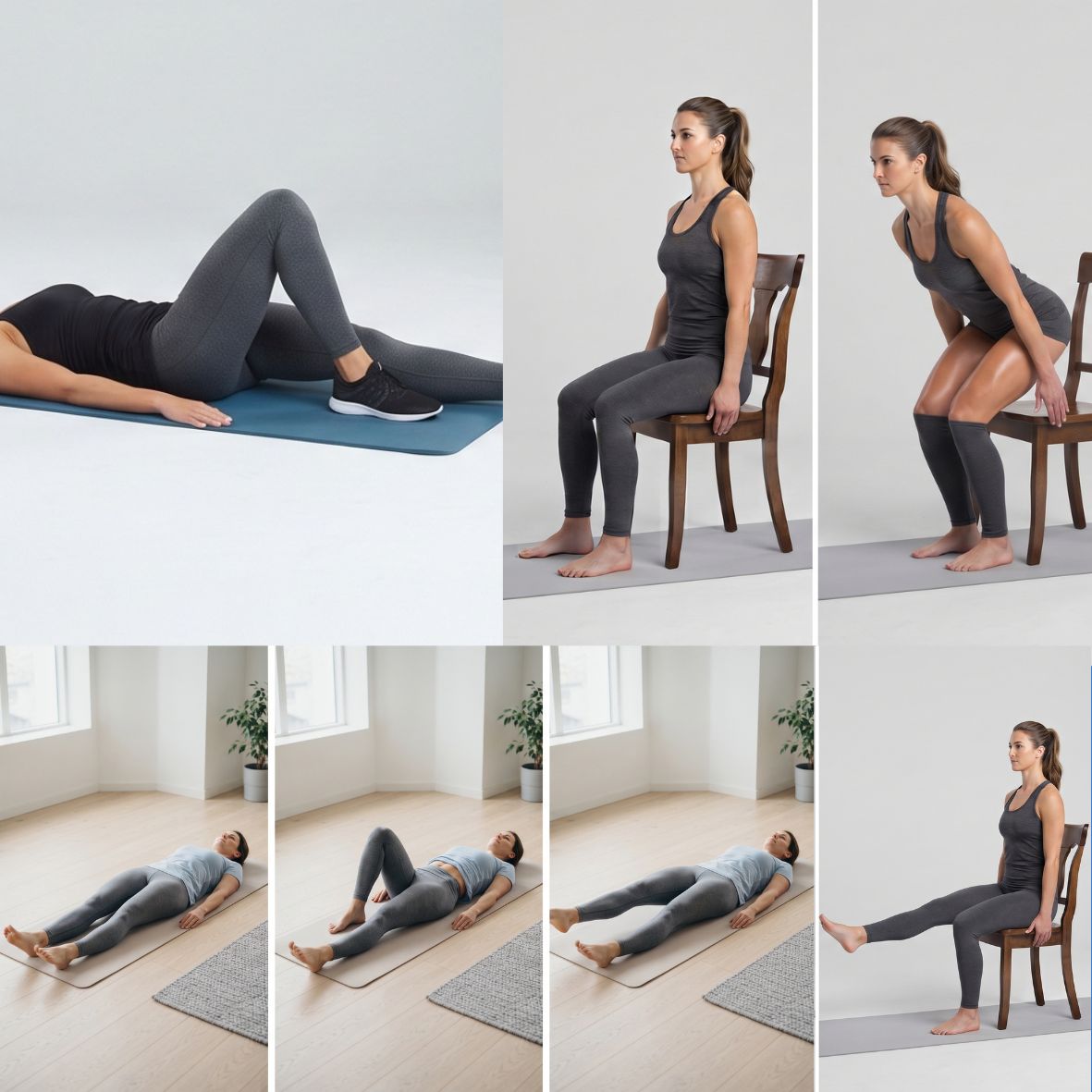
Keeping Your Knees Moving: The Best Exercises for Knee Osteoarthritis
If you have knee osteoarthritis, your first instinct might be to rest your joints and avoid movement. When every step feels stiff or painful, exercise can sound like the last thing you should do. However, medical experts agree that movement is actually one of the best treatments for osteoarthritis. When you sit still, your joints stiffen up. When you move safely, you pump lubricating fluid into your knees, build a natural “brace” of muscle around the joint, and reduce overall pain. Here is a simple, low-impact exercise guide designed to protect your joints and get you moving comfortably again.
The Power Trio: 3 Types of Exercise You Need
To effectively manage knee osteoarthritis, your routine should focus on three specific areas: strengthening the muscles around the knee, keeping the hips and glutes stable and your balance sharp, and maintaining flexibility.
1. Thigh Strengthening (The Shock Absorbers)
Your quadriceps (the muscles on the front of your thigh) act as your body's natural shock absorbers. Strong quads take the pressure off your knee joint.
Quad sets (isometric quadriceps contraction)
Lie flat on your back, or sit with your legs stretched out in front of you. Place a small rolled-up towel under the knee. Tighten the muscle on the front of your thigh and press the back of your knee gently down into the towel, pulling your toes toward your face. Hold for 5 seconds, then relax slowly. Do 10 repetitions per leg. Because the knee does not move, this is a good starting point on days when the joint is sore. Breathe normally throughout and do not hold your breath.
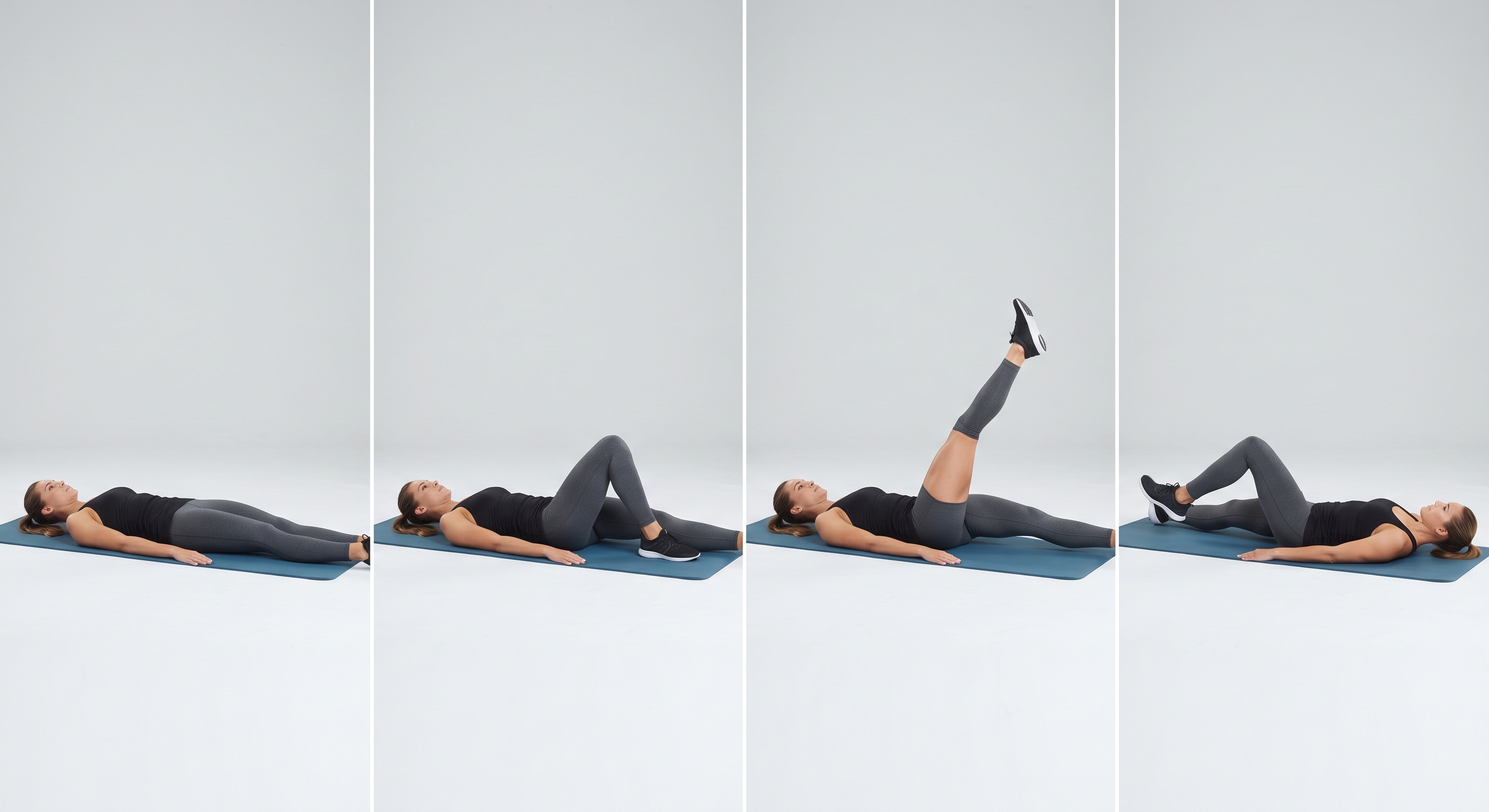
Straight leg raises
Lie flat on your back. Bend one knee and place that foot flat on the floor for support. Keep your other leg straight, tighten the thigh muscle, and slowly lift your foot about 12 inches (30 cm) off the ground. Hold for 3 seconds, then lower slowly. Do 10 repetitions per leg.
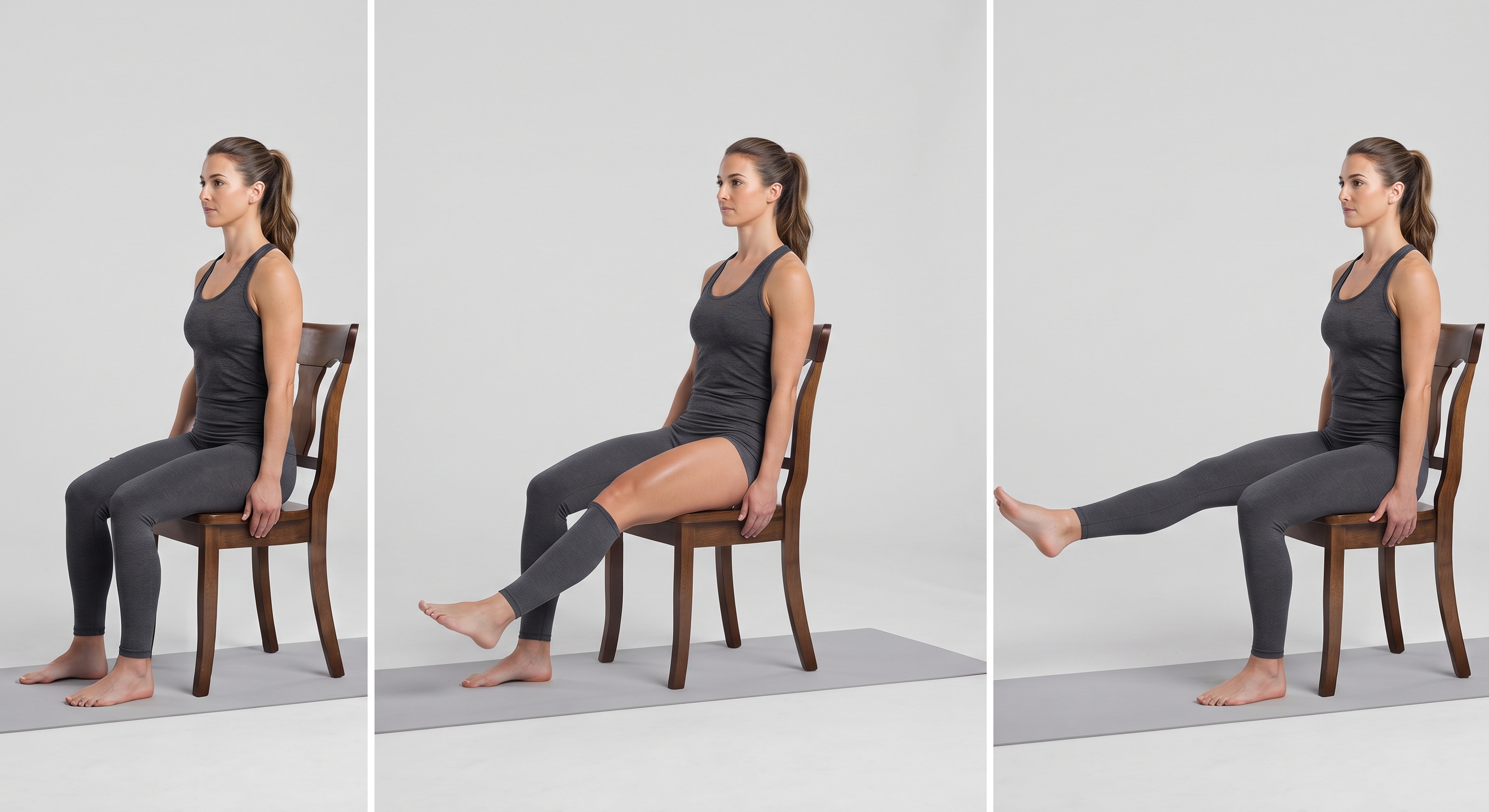
Seated knee extensions
Sit up straight in a sturdy chair. Slowly straighten one leg out in front of you as far as comfortable. Hold for 5 seconds, then slowly lower it. Do 10 repetitions on each side.
2. Hip, Glute & Balance Stability (The Alignment Crew)
If your hips and buttocks are weak, your legs can cave inward, causing uneven wear and tear on your knee joints. Good balance also lowers the risk of falls.
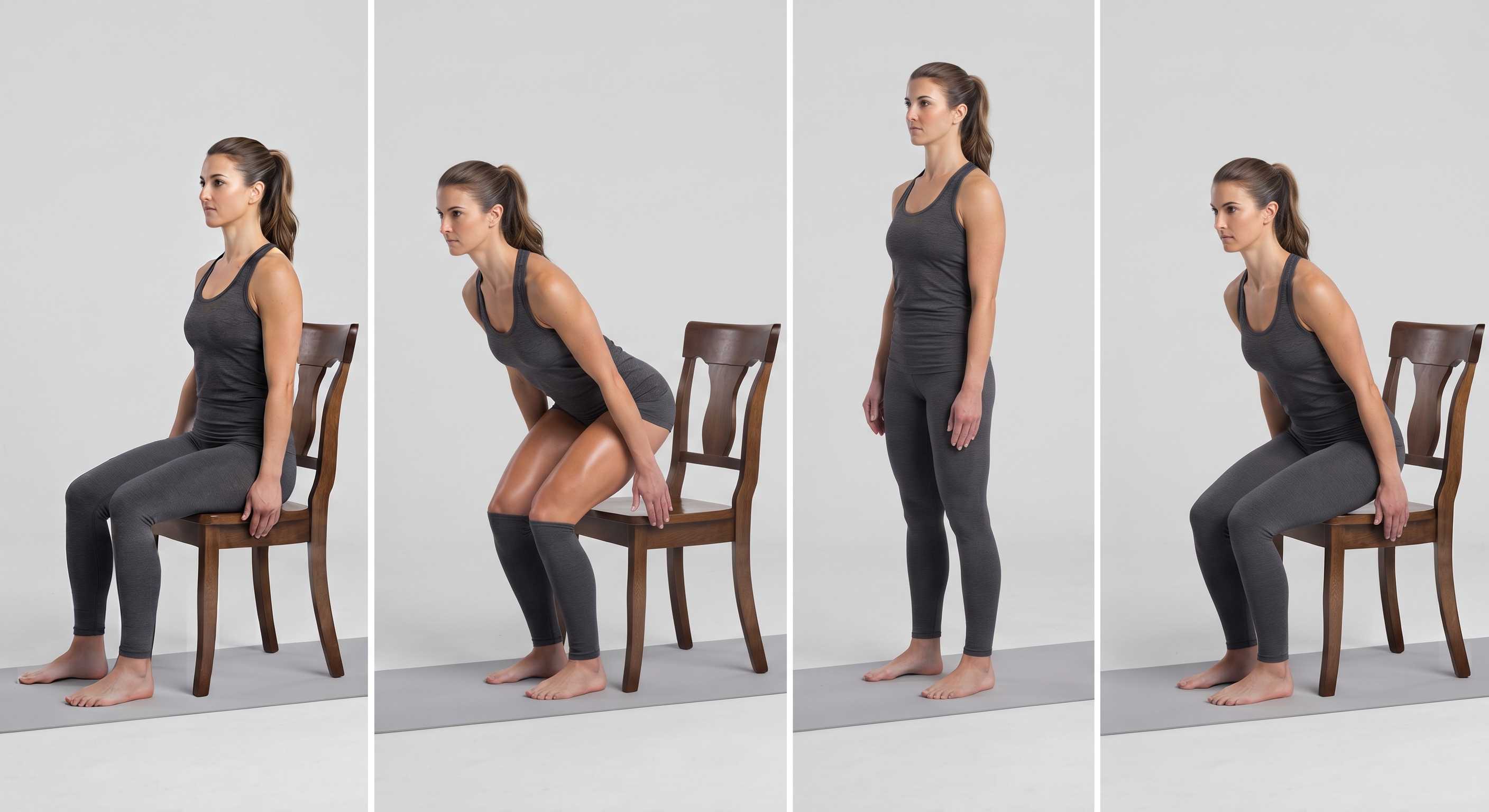
Sit-to-stands
Sit on a standard dining chair. Lean your torso slightly forward, press firmly into your feet, and push yourself up to a full standing position without using your hands. Slowly lower yourself back down to the seat. Perform 5 to 10 repetitions.
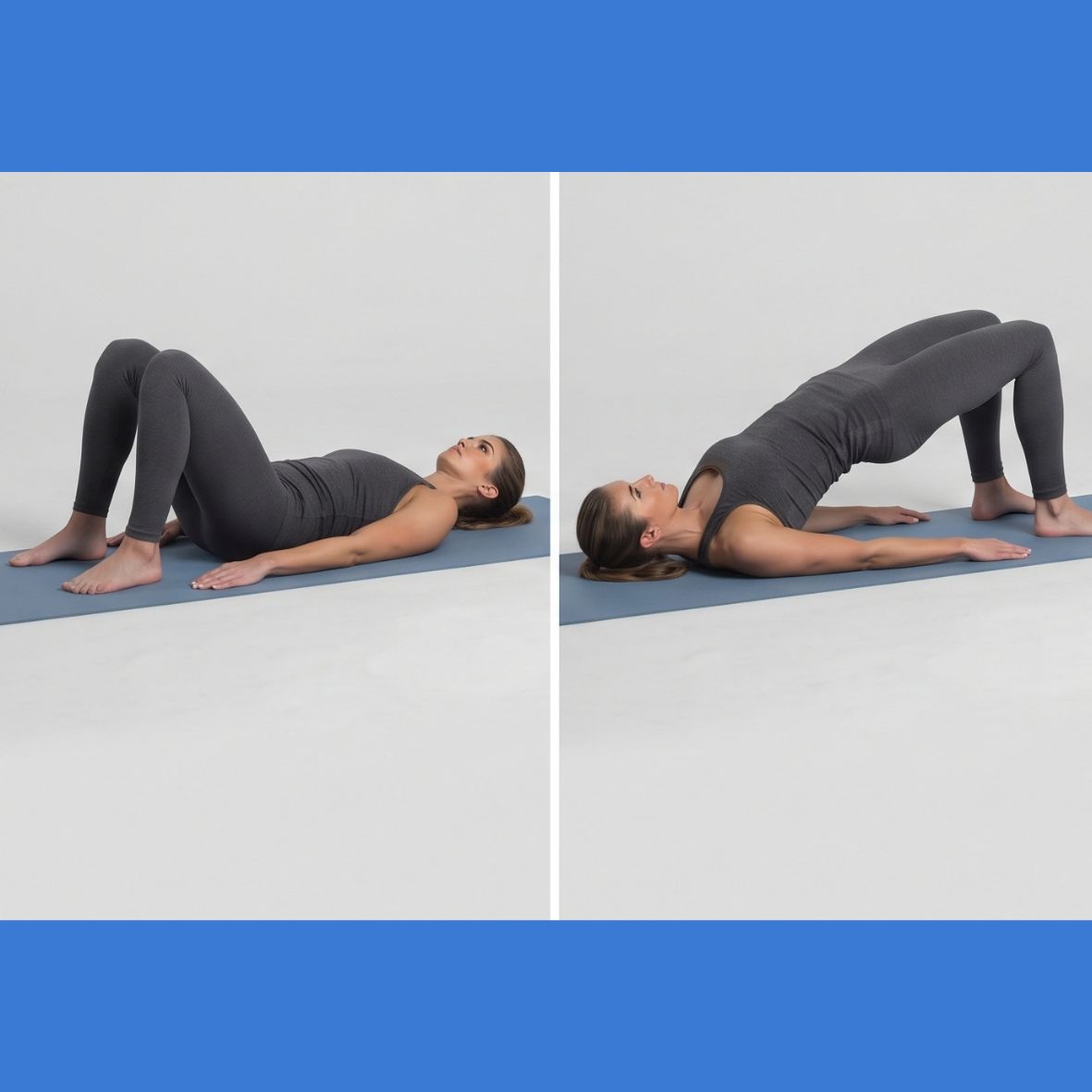
Glute bridges
Lie on your back with your knees bent and feet flat on the floor. Squeeze your buttocks and push through your heels to lift your hips toward the ceiling. Hold for 5 seconds, then slowly lower. Do 10 repetitions.
Pillow squeezes (inner thigh strengthening)
Lie on your back, or sit comfortably in a chair, with both knees bent. Place a firm pillow, a yoga block or a small soft ball between your knees. Squeeze your knees together gently and hold for 5 seconds, then release. Do 10 repetitions. This strengthens the inner thigh (hip adductor) muscles that help support the hip and knee. Think of it as a useful add-on to the exercises above rather than a replacement for them.
Standing heel and toe raises (balance and lower-leg strength)
Stand tall, holding the back of a sturdy chair or a stable kitchen counter for support. Rise slowly onto your toes, hold for 3 seconds, then lower slowly. Next, keeping your heels on the floor, lift your toes up, hold for 3 seconds and lower. Do 10 repetitions of each. This builds strength in the calves and shins and helps your balance when walking. Stay close to your support at all times, wear non-slip shoes, and skip this exercise if you feel unsteady until you have been checked by your doctor or physiotherapist.
3. Mobility & Flexibility (The Stiffness Breakers)
Stretching ensures your joint retains its full range of motion, preventing that stubborn “frozen” feeling in the morning.
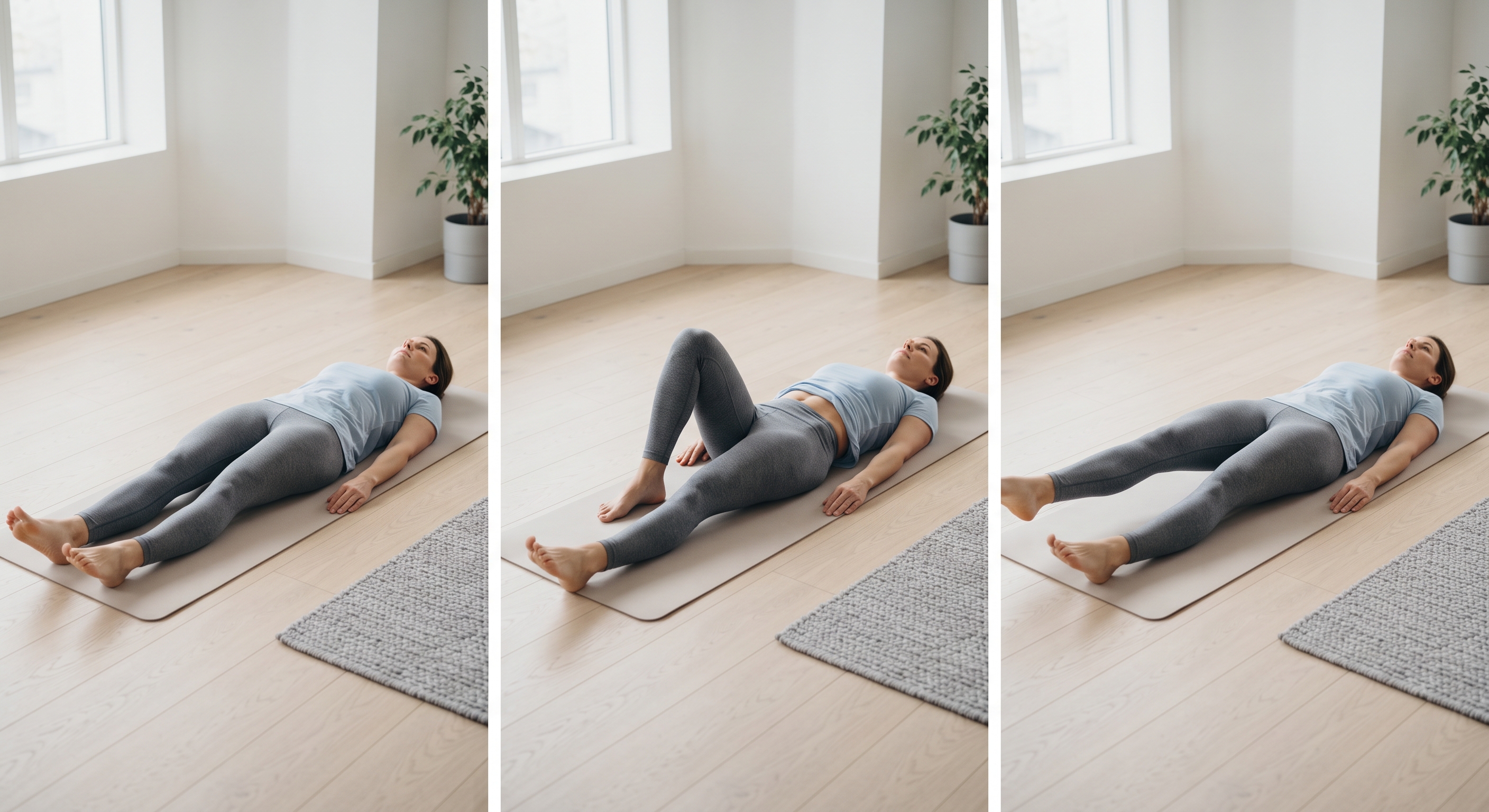
Heel slides
Lie on your back with your legs straight. Slowly slide your heel along the floor toward your buttocks until you feel a gentle stretch in the knee. Slide it back out smoothly. Repeat 10 times per leg.
Seated hamstring stretch
Sit on the edge of a chair. Extend one leg straight out in front of you with your heel on the floor. Keep your back completely straight and gently lean forward from your hips until you feel a gentle pull behind your thigh. Hold for 30 seconds. Repeat 3 times per side.
How Much and How Often?
Start with 1 set of the repetitions listed and build up gradually to 2 or 3 sets over a few weeks, once or twice a day, as it feels comfortable. Move slowly and smoothly, and breathe normally. Never hold your breath during the holds, which matters especially if you have high blood pressure.
How to Exercise Safely: The “Traffic Light” Rule
It is entirely normal to feel a mild dull ache or stiffness when you start exercising. However, you should never push through severe pain. Use this simple traffic light system to guide you:
- 🟢 Green light (pain 0–2/10): mild discomfort or stretching. Safe to proceed!
- 🟡 Yellow light (pain 3–5/10): a noticeable ache, but manageable. Proceed with caution, or reduce the number of repetitions.
- 🔴 Red light (pain 6–10/10): sharp, stabbing, or sudden pain. Stop immediately.
As a rule, any ache after exercise should settle within 24 hours. If it does not, do less next time.
When to See a Doctor Before Exercising
Do not exercise on a knee that is hot, red or swollen, and seek medical advice promptly if you have any of the following:
- fever together with a painful knee
- a knee that locks or gives way
- inability to put weight on the leg
- new swelling or pain in the calf
These can point to problems other than osteoarthritis that need proper assessment.
The Bottom Line
When it comes to osteoarthritis, consistency matters far more than intensity. Doing a few low-impact movements for 10 minutes every day is much better for your joints than a grueling 1-hour workout once a week.
Pair these exercises with low-impact cardio like swimming, stationary cycling, or daily walks on flat surfaces to keep your knees happy, lubricated, and moving for years to come. Exercise is recommended as first-line treatment for knee osteoarthritis by leading guidelines, including those of OARSI, the American College of Rheumatology and NICE.
Always consult your doctor or a physiotherapist before starting a new exercise routine, especially if you experience sudden swelling, clicking, or locking in your joints.
Knee pain not improving with home exercises? Message directly and ask.
Message on WhatsAppThis article is general health information and does not replace a medical consultation. In a medical emergency, call SAMU (114) or go to your nearest hospital.