
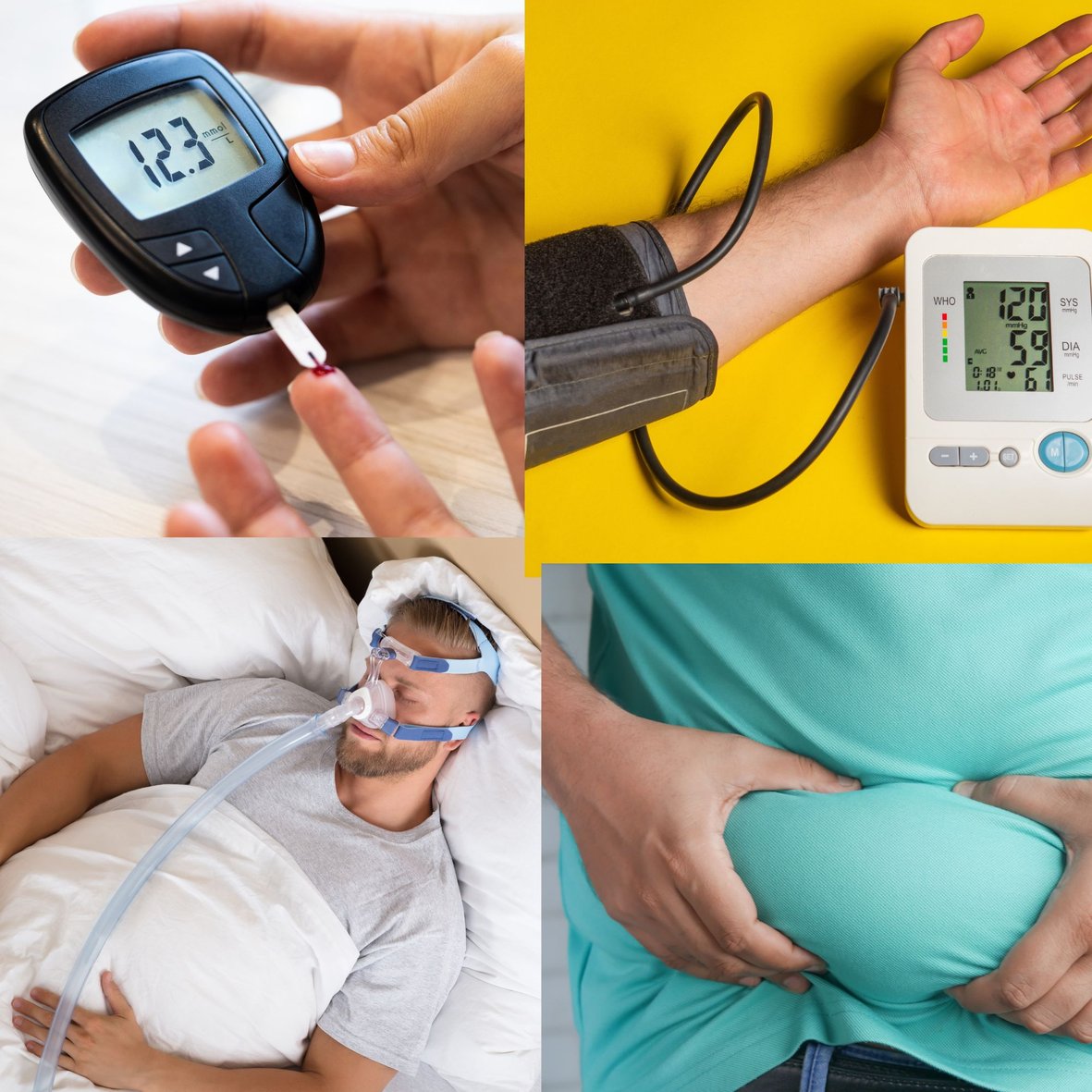
Sleep Apnea: The Hidden Cause Behind Stubborn Weight, High Blood Pressure and High Blood Sugar
Are you doing everything right to lose weight, yet the scale keeps creeping up?
Do you take your medication faithfully, yet your blood pressure, blood sugar or cholesterol stay high?
Do you snore at night? Do you wake up tired, no matter how long you slept?
If so, the problem may not be your discipline. It could be sleep apnea, a common but often undiagnosed condition. Here is what you need to know.
What Is Sleep Apnea?
Sleep apnea is a condition in which your breathing repeatedly stops and starts while you sleep. The most common type is obstructive sleep apnea: the muscles at the back of your throat relax, the airway narrows or collapses, and airflow is blocked for 10 seconds or more. Your oxygen level drops, your brain senses the danger and briefly wakes you up to restart breathing. In severe cases this can happen more than 30 times an hour.
Most people do not remember these awakenings, so they think they slept all night. In reality, their sleep was broken into pieces, and their body was under stress for hours.
Warning Signs to Look For
At night
- Loud, regular snoring
- Pauses in breathing noticed by your partner or family
- Waking up gasping, choking or with a racing heart
- Restless sleep, heavy sweating at night
- Needing to pass urine several times a night
- A dry mouth or sore throat on waking
During the day
- Waking up unrefreshed, however long you slept
- Morning headaches
- Excessive sleepiness, including dozing off while watching TV, reading or driving
- Poor concentration and forgetfulness
- Irritability or low mood
Not everyone who snores has sleep apnea, and some people with sleep apnea do not snore loudly. What matters is the combination of symptoms.
Why Sleep Apnea Affects Your Weight, Blood Pressure and Blood Sugar
Sleep apnea is rarely the only reason for these problems, but it is a common and treatable contributor that is often missed. Repeated drops in oxygen and broken sleep affect the body in several ways:
- Blood pressure: each episode triggers a surge of stress hormones such as adrenaline. Over time, this keeps blood pressure high, and sleep apnea is a well-known cause of hypertension that stays difficult to control despite several medicines.
- Blood sugar: poor sleep and low oxygen make the body more resistant to insulin, which pushes blood sugar up and makes diabetes harder to control.
- Weight: lack of restful sleep disturbs the hormones that control hunger and fullness, increasing cravings for sugary, fatty food, while daytime tiredness makes it harder to stay active.
- Cholesterol: sleep apnea is also associated with unfavourable cholesterol levels.
- A vicious circle: extra weight, especially around the neck and abdomen, narrows the airway and worsens sleep apnea, which in turn makes weight loss harder.
Who Is More at Risk?
- People who are overweight or have a large waist
- A neck circumference of more than 40 cm (16 inches)
- Men, and women after menopause
- People over 40, although it can occur at any age
- People with high blood pressure, type 2 diabetes or heart disease
- A family history of sleep apnea or snoring
- Alcohol or sedative use in the evening, smoking, or a blocked nose
Why It Should Not Be Ignored
Untreated sleep apnea is more than a nuisance. It is linked to heart attack, stroke, irregular heart rhythm (atrial fibrillation), heart failure, worsening diabetes and depression. Daytime sleepiness also raises the risk of road and workplace accidents.
How Is Sleep Apnea Diagnosed?
The first step is a consultation: your doctor will ask about your symptoms and sleep habits, often with a short questionnaire, and check your weight, neck size, blood pressure, nose and throat. If sleep apnea is suspected, a sleep study confirms the diagnosis. It records your breathing, oxygen level and heart rate overnight, either at home or in a sleep laboratory, and tells us how severe the problem is.
How Is Sleep Apnea Treated?
The good news is that sleep apnea is treatable. The right treatment depends on how severe it is:
- CPAP (continuous positive airway pressure): a mask worn at night that delivers gentle air pressure to keep the airway open. It is the most effective treatment for moderate to severe sleep apnea.
- Weight loss: losing even a modest amount of weight can reduce the severity of sleep apnea, and sometimes improves it greatly.
- Sleep habits: sleeping on your side rather than your back, avoiding alcohol and sedatives close to bedtime, stopping smoking, and treating a blocked nose.
- Oral devices or surgery: in selected patients, a custom mouth device that moves the jaw forward, or a procedure to correct a physical blockage, may be an option.
When sleep apnea is treated, many people notice more energy, better concentration and better control of blood pressure and blood sugar, and weight loss often becomes easier.
The Bottom Line
If you snore, feel tired all the time, and your weight, blood pressure, blood sugar or cholesterol will not improve despite your efforts, do not blame yourself. Ask your doctor about sleep apnea.
Please do not try to diagnose yourself, and do not stop or change your medication on your own. A proper evaluation, including a sleep study when needed, is the only way to know for sure.
Snoring, constant tiredness, and numbers that will not come down? Message directly and ask.
Message on WhatsAppThis article is general health information and does not replace a medical consultation. In a medical emergency, call SAMU (114) or go to your nearest hospital.