
Home Exercises for Frozen Shoulder: A Safe, Stage-by-Stage Guide
Frozen shoulder, or adhesive capsulitis, causes stiffness, pain, and reduced range of motion in the shoulder, usually developing gradually over months. Exercise is the cornerstone of recovery — but doing too much, too soon, in an already inflamed shoulder can set you back rather than move you forward. Here are four exercises that help, and how to pace them safely.
Before you start
- Make sure the diagnosis is confirmed. Shoulder stiffness has several causes — a torn rotator cuff and osteoarthritis can look similar at first — and the right exercise plan depends on knowing which one you're dealing with.
- Match the intensity to your stage. In the early, painful stage, keep stretches gentle and brief. As the pain eases, you can safely hold stretches longer and go further.
- Warm up first. A warm shower or a heat pack wrapped in a towel before you start loosens the joint and makes stretching more comfortable.
- Time your pain relief. If you use painkillers, doing your exercises about an hour after taking them lets you stretch further with less discomfort.
The four exercises
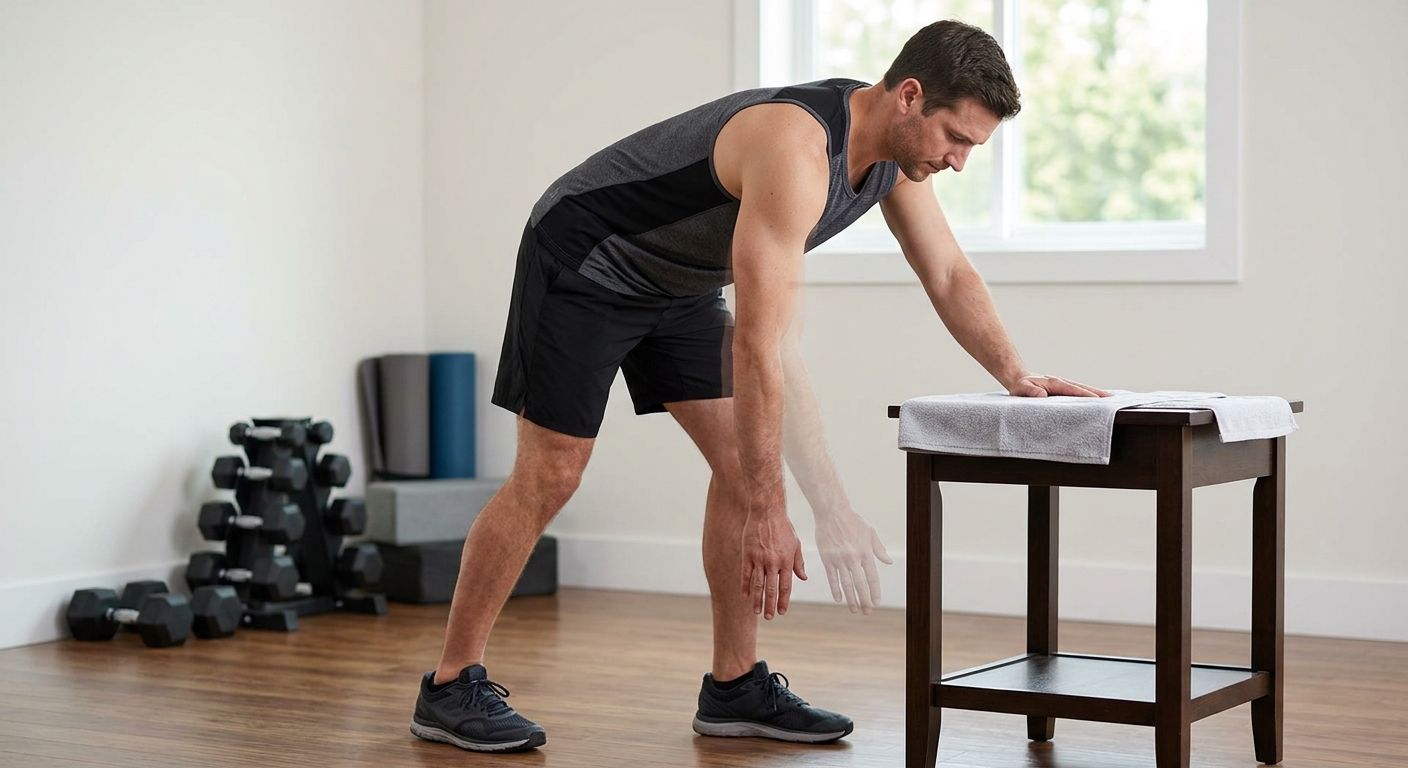
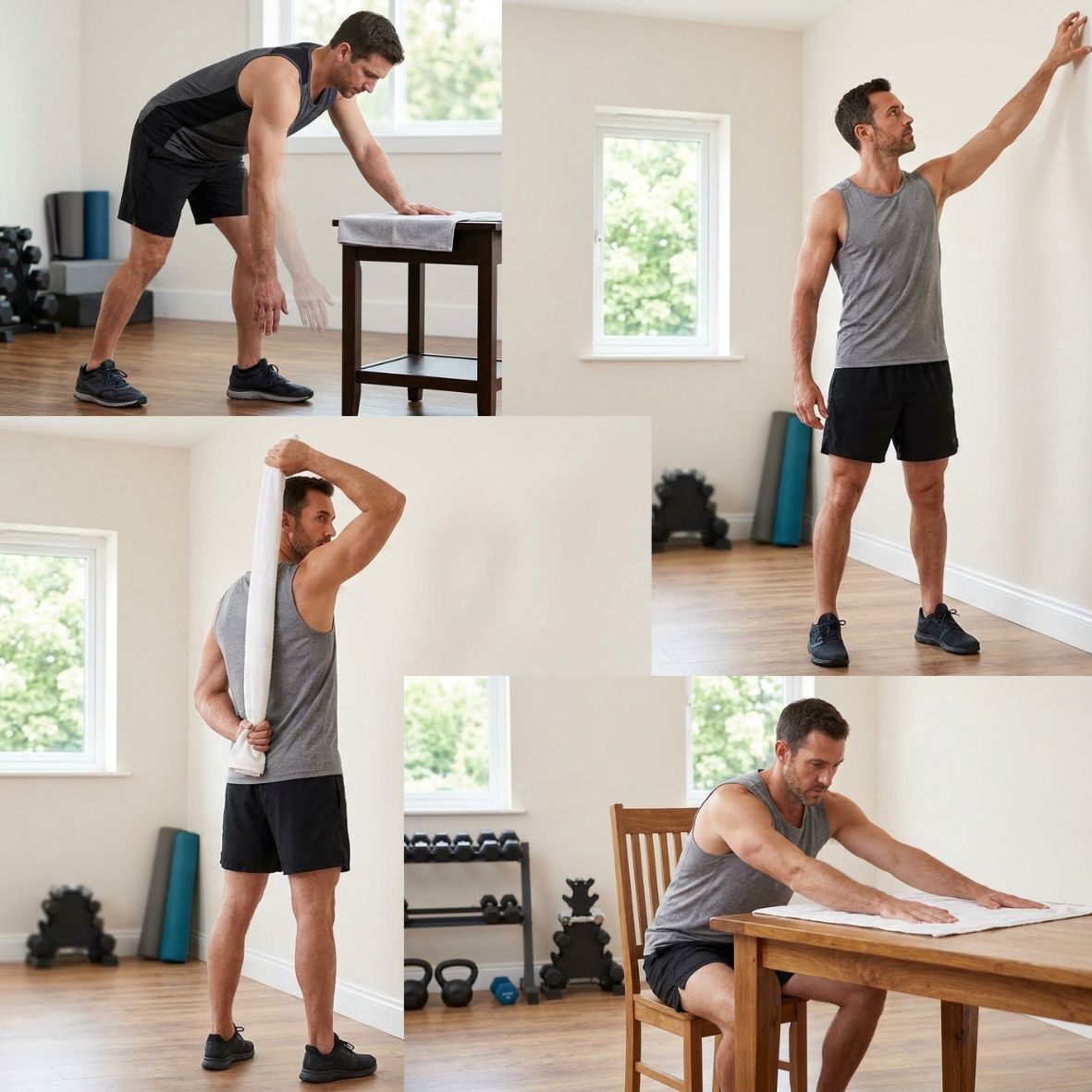
1. Pendulum stretch
Lean forward and support your good arm on a table. Let your frozen arm hang down freely, then gently swing it forward and back, side to side, or in small circles for about a minute. Do this 3 times a day. Keep the circles small while the shoulder is still painful, and widen them gradually as it improves.

2. Wall walk (finger crawl)
Stand facing a wall, about arm's length away. Slowly "walk" your fingers up the wall as high as you comfortably can, then lower your arm back down slowly. Repeat a few times. The fingers should be doing the climbing — if you find yourself hitching your shoulder or leaning your body to gain height, you've gone higher than the joint is ready for.

3. Towel stretch
Hold a towel with both hands behind your back, with your good arm on top, and gently pull the affected arm upward until you feel a light stretch. Hold for 15 seconds and repeat 3 to 5 times. If your shoulder is still in the painful, inflamed stage, shorten this to just a few seconds per hold rather than the full 15 — length of hold matters less than staying pain-free early on.

4. Table slide
Sit at a table with a towel under your hands. Lean forward and slide your hands along the table away from your body, holding the stretch for 15 seconds. As with the towel stretch, keep this brief and gentle if you're still in the painful stage.
How much is too much?
A gentle ache during or after these stretches, which fades within 30 minutes of stopping, is normal and expected — it's a sign the tightened capsule is responding to the stretch. Sharp pain, pain that worsens as you move, or pain that's still there more than an hour later is a different signal: stop, rest, and go gentler next time.
Filling the gap: stick exercises
Frozen shoulder typically restricts outward rotation more than any other movement, and none of the four stretches above train it directly. A stick — a broom handle, an umbrella, or a dedicated exercise wand all work — lets your good arm gently guide the affected one through movements it can't yet manage alone. Add these once your pain allows, and keep the same rule as above: a light stretch is fine, sharp pain is not.
5. Overhead stick raise
Lying down or standing, hold the stick with both hands, a little wider than shoulder-width. Use your good arm to push the affected arm up and overhead as far as feels comfortable, then lower slowly.
6. External rotation with the stick
Tuck your elbow into your side, bent to 90°, holding the stick horizontally in both hands. Use your good arm to push the affected forearm outward, away from your body, then return. This trains the movement frozen shoulder restricts the most.
7. Internal rotation behind the back
Hold the stick vertically behind your back, one hand reaching over the shoulder from above, the other reaching up from the lower back. Use the top hand to gently pull the stick — and the lower arm with it — upward.
8. Cross-body stretch with the stick
Hold the stick horizontally in front of you at chest height. Use your good arm to push the affected arm across your body toward the opposite shoulder, and hold.
As with the four core exercises, hold each position 15 to 30 seconds, repeat 10 to 15 times, once or twice a day — and go by how the shoulder feels that day, not by how far you managed yesterday.
Shoulder stiffness or pain not improving with home exercises? Message directly and ask.
Message on WhatsAppThis article is general health information and does not replace a medical consultation. In a medical emergency, call SAMU (114) or go to your nearest hospital.